Helping my 4yo learn to read in 2026
I’m writing this mostly as a guide for myself. It’s also a way to stay accountable as I follow this plan in 2026, and to get feedback from friends who are also parents on ideas or improvements.
My 4-year-old spends hours every day with books, a love that started at age one, and shows genuine curiosity about the text. For my family, that seems like the right signal to see if the interest is there to learn to read ahead of the usual school timeline. My bet is that learning to read earlier will make the book obsession even more enjoyable and set the tone for lifelong self-learning.
Every kid is different. So I’ve had to customise the experience, frameworks and tools to facilitate learning. Below is the plan I’m following after experimenting with a few things over the last year or so. I’m a software engineer and pretty pro tech and AI as a way to start changing our outdated and inflexible educational systems.
Also, I’m interested in hearing from anyone in Australia working on tech-enabled school models, like Alpha School is doing in the US.
1. Principles: Fun and Consistency
It’s simple. At this age, fun is non-negotiable in our house. A small example: one of my kids loves swimming lessons. We tried jiu jitsu, and it turned into a struggle before every class. Swimming stayed because it’s the one they look forward to.
The same applies to learning to read. It needs to be fun. For us, that comes down to whatever routine we’ve created, which tools or books we’re using, and even the positive communication between parent and child around the topic.
Once that baseline is there, my job becomes consistency. For me, in 2026, that means 10 to 15 minutes a day, right after brekkie!
2. Readiness
Over the last few months, I did some “pre-reading” practice with my kid in a very casual way. Mostly getting familiar with letter and sound pairings through kids’ books and the Duolingo ABC app.
The part that didn’t land at first was left-to-right reading order. I tried to introduce it, but it felt confusing. So I kept the casual letter practice going but put the reading order stuff on hold for about 6 months.
A few weeks ago I tried again, and this time it made sense straight away.
The simplest readiness check I’ve used comes from Mentava. The idea is: if a child can’t tell the difference between “dogfish” and “fishdog”, then “am” and “ma” will also be hard.
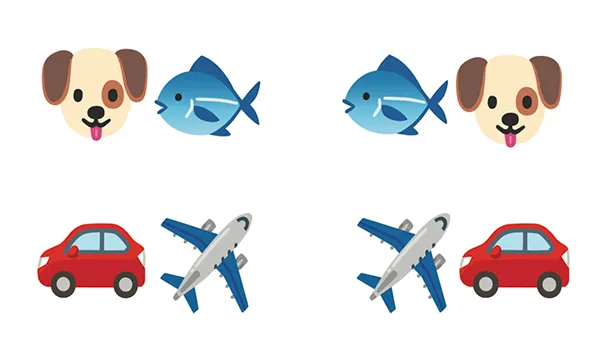
3. Mentava Reading Curriculum
We’re using the Mentava iPad app and curriculum. Here’s how they explain their product:
Most mainstream “educational” software would be better classified as “edutainment”. It optimises for holding children’s attention as they passively consume content for as long as possible. Mentava is designed to be an active learning experience that delivers rigorous learning outcomes. Practice sessions typically last about 15-30 minutes before students are too mentally tired to continue.
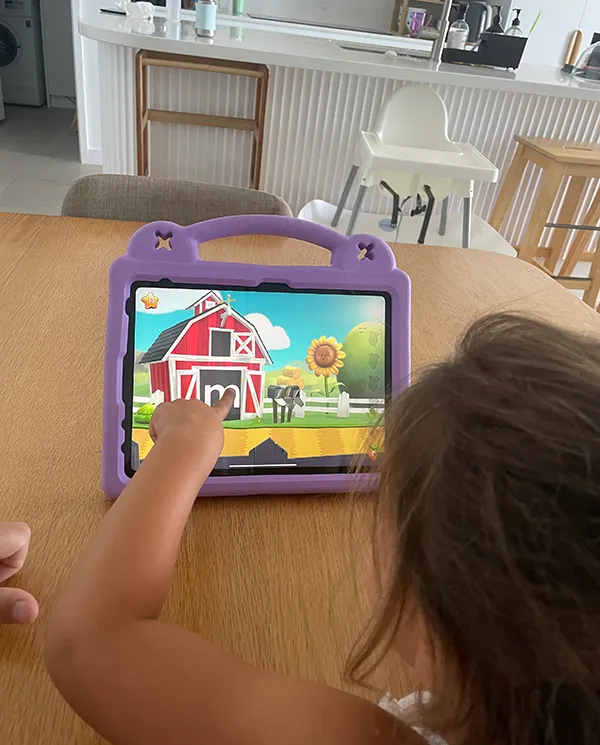
4. Repetition through books
Even when our home is tidy, there’s one type of chaos that is always allowed, by design. You’ll find books everywhere. My books, my partner’s and the kids’. With the “learning to read” curriculum, it becomes natural to focus on the new sounds and letters as we find them in stories throughout the day. It helps a lot if both parents know the weekly focus.
5. Repetition through Personal Apps
When my first kid was born, I built Sunflowy to help me write milestones and memories for each kid. It’s basically journaling focused on them. On top of the fond memories, I get a lot of good data on developmental readiness, preferences, and what’s clicking, which is great input for the wave of AI tutoring apps that will keep coming in the coming decades.
My next step (very soon) is to code a small personal iPad app to complement Mentava, mostly for extra practice in a way that feels highly motivating for my kid.
The concept is simple:
- The app displays the letter combinations or short words we’re practising that week.
- My kid reads them out loud, and the app captures the audio (and a transcript).
- When they get a set right, they unlock a “reward” image that gets generated in real time, using their favourite characters and themes. Think Moana, Superkitties, rainbow unicorns, and whatever funny accessories they request that day.
That’s it. Please send any other suggestions or improvements my way! In 12 months, I’ll write a post here documenting the results of this process.